 Access Your Free Counseling Session
Click Here
Access Your Free Counseling Session
Click Here

Every student dream of studying MBBS India or abroad will now come true. With our expert counsel
Electronics and Communication Engineering (ECE) is a core branch of engineering that focuses on the research, design, development, and testing of electronic equipment used in various communication systems. It bridges the gap between hardware …
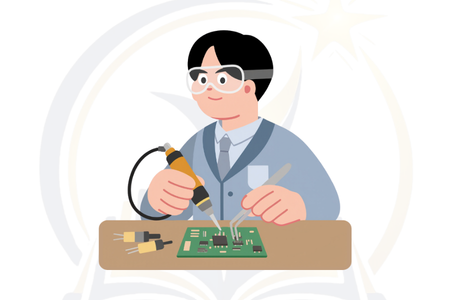
Electronics and Communication Engineering (ECE) is a core branch of engineering that focuses on the research, design, development, and testing of electronic equipment used in various communication systems. It bridges the gap between hardware architecture and software applications, making it the driving force behind modern technologies like smartphones, satellite networks, internet infrastructure, autonomous vehicles, and smart healthcare devices.
1. Core Academic Foundations
The ECE curriculum combines physics, mathematics, and computer science. It is generally structured around five foundational pillars:
Analog and Digital Electronics: Designing circuits using components like diodes, transistors, and logic gates to build processors and memory devices.
Communication Engineering: Studying how data is transmitted across distances via electromagnetic waves, covering satellite, fiber-optic, and wireless network protocols.
Signals and Systems: Using advanced mathematical modeling (like Fourier and Laplace transforms) to process, filter, and interpret audio, video, and data signals.
Embedded Systems and IoT: Programming microcontrollers (like ARM or AVR architectures) to control physical hardware, forming the basis of Internet of Things (IoT) systems.
VLSI Design (Very Large-Scale Integration): Fabricating millions of transistors onto a single microchip, which is crucial for modern computer hardware and semiconductor technology.
2. Essential Tools and Technologies
An ECE professional relies heavily on both specialized software and hardware equipment to design and test systems:
Simulation Software: Tools like MATLAB for signal processing, National Instruments Multisim for circuit design, and ANSYS HFSS for antenna design.
Hardware Description Languages (HDLs): Verilog and VHDL, which are used to program Field Programmable Gate Arrays (FPGAs) and model semiconductor chips.
Testing Hardware: Oscilloscopes, spectrum analyzers, and signal generators used to debug physical prototypes.
Programming Languages: C, C++, and Python for writing low-level firmware and embedded application code.
3. Career Path Options
Graduates in ECE possess a versatile skillset that allows them to pivot into either hardware-centric "core" fields or software-driven industries:
| Career Category | Target Job Roles | Primary Work Focus |
|---|---|---|
Core Electronics | Hardware Design Engineer, VLSI Engineer | Microchip development, PCB layout, and semiconductor fabrication. |
Telecommunications | Network Engineer, RF (Radio Frequency) Engineer | Deploying 5G networks, optimizing wireless signals, and satellite operations. |
Embedded & IoT | Embedded Software Engineer, Firmware Developer | Writing code to control automotive systems, robotics, and smart appliances. |
Software & Tech | Software Developer, Data Analyst | Designing algorithms, system architecture, and cloud cloud applications. |
4. Future and Emerging Trends
The field of ECE is evolving rapidly, driven by the demand for faster data transfer, smaller hardware, and automation:
Next-Generation Telecom: Developing infrastructure for 6G networks and terahertz communication.
Edge AI: Deploying machine learning algorithms directly on small microchips rather than rely on the cloud.
Quantum Computing: Redefining processing power by replacing binary silicon chips with quantum processors.
Autonomous Systems: Building advanced sensor arrays, LiDAR, and radar tech for self-driving cars and drones.
To secure admission into a 4-year B.Tech (Bachelor of Technology) or B.E. (Bachelor of Engineering) in Electronics and Communication Engineering, you need to meet specific academic, stream, and entrance exam requirements.
1. Educational Qualification & Stream
Minimum Education: You must have passed or be appearing in your Class 12 (10+2) or equivalent higher secondary examination from a recognized central or state board (e.g., CBSE, ICSE, or State Boards).
Compulsory Subjects: Your stream must be Science with Physics, Chemistry, and Mathematics (PCM). Some universities allow Computer Science or Electronic Science as a replacement for Chemistry, but Physics and Math remain non-negotiable.
2. Minimum Marks Requirement
General Eligibility: Most state universities and private engineering colleges require a minimum aggregate of 45% to 50% marks in PCM in Class 12.
Premier Institutions (IITs, NITs, IIITs): To be eligible for admission via JEE, you must secure a minimum of 75% aggregate marks in your Class 12 board exams (65% for SC/ST candidates), or be in the top 20 percentile of your respective board.
3. Age Limit
General Rules: There is no upper age limit for appearing in major engineering entrance exams like JEE Main, JEE Advanced, or most state-level exams.
4. Entrance Exam Route (Mandatory for Admission)
Merit in Class 12 alone is rarely enough; you must clear an engineering entrance exam. The admission process generally falls under three categories:
National-Level (For Top Public Colleges): Cleared through JEE Main (for NITs, IIITs, and GFTIs) and JEE Advanced (for IITs).
State-Level (For State Govt. and Private Colleges): Cleared through exams like MHT-CET (Maharashtra), WBJEE (West Bengal), KCET (Karnataka), TNEA (Tamil Nadu, based on 12th marks), etc.
University-Level (For Specific Top Private Colleges): Cleared through institutional exams like BITSAT (BITS Pilani), VITEEE (VIT), SRMJEEE (SRM), or MET (Manipal).
Alternative Route: Lateral Entry for Diploma Holders
If you did not do Class 12 but instead completed a 3-year Polytechnic Diploma in ECE, Electrical, or an allied branch after Class 10, you are eligible for B.Tech Lateral Entry.
Benefit: You bypass the first year and get direct admission into the 2nd year (3rd semester) of B.Tech.
Requirement: Typically requires a minimum of 45% to 50% aggregate marks in your diploma, evaluated via state lateral entry exams (like JELET, LEET, etc.).
Confirm academic eligibility and entrance examination requirements.
Appear for the applicable entrance examination wherever required.
Compare colleges based on fees, location, seats and admission criteria.
Complete counselling, documentation and final admission formalities.
Fee information will be updated soon.
We are currently updating colleges offering Electronics and Communication Engineering.
Explore professional opportunities available after completing this course.
Pursue advanced specialisations and postgraduate programs.
Build specialised skills and explore long-term career growth opportunities.
The duration of Electronics and Communication Engineering is 4 Years.
To secure admission into a 4-year B.Tech (Bachelor of Technology) or B.E. (Bachelor of Engineering) in Electronics and Communication Engineering, you need to meet specific academic, stream, and entrance exam requirements.
1. Educational Qualification & Stream
Minimum Education: You must have passed or be appearing in your Class 12 (10+2) or equivalent higher secondary examination from a recognized central or state board (e.g., CBSE, ICSE, or State Boards).
Compulsory Subjects: Your stream must be Science with Physics, Chemistry, and Mathematics (PCM). Some universities allow Computer Science or Electronic Science as a replacement for Chemistry, but Physics and Math remain non-negotiable.
2. Minimum Marks Requirement
General Eligibility: Most state universities and private engineering colleges require a minimum aggregate of 45% to 50% marks in PCM in Class 12.
Premier Institutions (IITs, NITs, IIITs): To be eligible for admission via JEE, you must secure a minimum of 75% aggregate marks in your Class 12 board exams (65% for SC/ST candidates), or be in the top 20 percentile of your respective board.
3. Age Limit
General Rules: There is no upper age limit for appearing in major engineering entrance exams like JEE Main, JEE Advanced, or most state-level exams.
4. Entrance Exam Route (Mandatory for Admission)
Merit in Class 12 alone is rarely enough; you must clear an engineering entrance exam. The admission process generally falls under three categories:
National-Level (For Top Public Colleges): Cleared through JEE Main (for NITs, IIITs, and GFTIs) and JEE Advanced (for IITs).
State-Level (For State Govt. and Private Colleges): Cleared through exams like MHT-CET (Maharashtra), WBJEE (West Bengal), KCET (Karnataka), TNEA (Tamil Nadu, based on 12th marks), etc.
University-Level (For Specific Top Private Colleges): Cleared through institutional exams like BITSAT (BITS Pilani), VITEEE (VIT), SRMJEEE (SRM), or MET (Manipal).
Alternative Route: Lateral Entry for Diploma Holders
If you did not do Class 12 but instead completed a 3-year Polytechnic Diploma in ECE, Electrical, or an allied branch after Class 10, you are eligible for B.Tech Lateral Entry.
Benefit: You bypass the first year and get direct admission into the 2nd year (3rd semester) of B.Tech.
Requirement: Typically requires a minimum of 45% to 50% aggregate marks in your diploma, evaluated via state lateral entry exams (like JELET, LEET, etc.).
You can find colleges currently offering Electronics and Communication Engineering in the college section on this page.
Submit the free counselling form and the Vidhya Setu Foundation team can guide you through college selection and admission.
© 2026-27 Vidhya Setu Foundation. All Rights Reserved | Design by Ajay Tripathi